Symptom
Why your wheel wobbles side to side
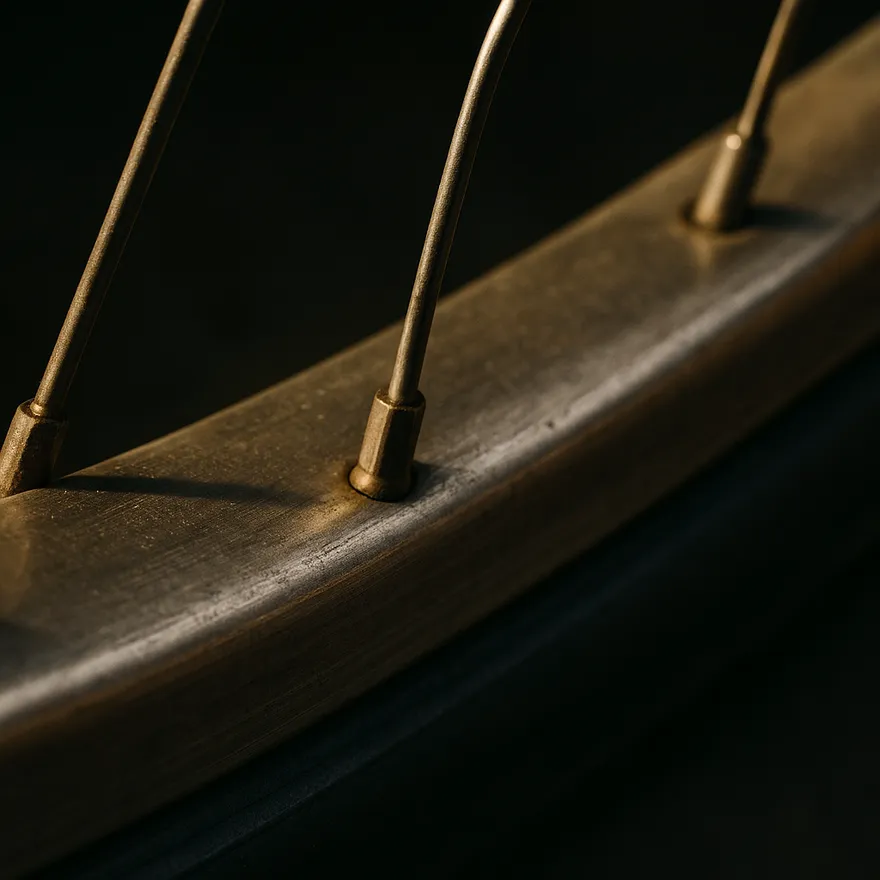
"Wobble" covers two entirely different faults, and separating them is the whole diagnosis. One lives in the rim, one lives in the hub, and work done on the wrong one is wasted.
Spin the wheel and watch a fixed point on the frame. Side-to-side movement as it turns is a rim out of true: spoke tension. Now stop the wheel and push the rim toward the frame. A knock or click is play in the hub bearings, and no amount of truing will touch it.
The hub case matters more than it sounds. A loose hub allowed to run that way grinds its own bearing surfaces, and the cost escalates from a bearing adjustment to a new wheel surprisingly quickly. It is worth the ten seconds to check.
Dubai adds one wrinkle: fine sand finds its way into hub seals faster than most riders expect, and a hub that has been through a few sandy rides without service can develop play early. That is a maintenance interval question rather than a fault.
What usually causes it
Listed most likely first. Work down the list: the top one is right more often than not.
Loose or broken spoke
How to tell: Lift the wheel and spin it. The wobble is in one place rather than everywhere. Squeeze pairs of spokes: one pair feels slack against the rest.
The fix: Spoke replaced if broken, then the wheel trued so tension is even all the way round.
Rim knocked out of true
How to tell: Follows a pothole, a kerb, or a heavy landing. The wobble is gradual rather than sharp, and the rim rubs one brake pad once per rotation.
The fix: Wheel trued on a stand, spoke by spoke.
Loose hub bearings
How to tell: Hold the wheel at the rim and rock it toward the frame and you feel a knock. The wobble is side-to-side play, not a bend in the rim.
The fix: Hub cones or bearings adjusted, or bearings replaced if they are pitted. Truing will not fix this and truing on top of it makes the wheel worse.
Wheel not seated in the dropouts
How to tell: Appeared straight after a puncture repair or after the wheel was taken off. The wheel sits visibly off-centre in the frame or fork.
The fix: Wheel reseated and the quick-release or thru-axle set correctly. Costs nothing and is worth checking before anything else.
Buckled or cracked rim
How to tell: A visible dent or flat spot, or a crack at a spoke hole. Sometimes follows a hard impact that also caused a puncture.
The fix: A small buckle can be trued out. A cracked rim is not repairable and the wheel needs rebuilding or replacing.
Worth knowing: Rock the wheel sideways before you ride. Play at the hub is a bearing problem, and a hub that is allowed to run loose will destroy its bearing surfaces, turning a cheap adjustment into a new wheel.
Not sure which one it is?
Send a photo or a short description and we will tell you the likely cause and the price before anyone travels.
Get a price on WhatsAppCommon questions
Can I ride a wheel that is slightly out of true?
Yes, if it does not rub the brake. A small wobble is not urgent, though it will get worse as the uneven tension works on the remaining spokes. A wheel with a broken spoke should not be ridden. The load redistributes and spokes then fail in sequence.
How do I know if it is the wheel or the hub?
Lift the wheel and spin it: a rim problem shows as a side-to-side movement as it turns. Then hold the rim still and push it toward the frame: if there is a knock, that is the hub. The two need completely different work.
Is truing a wheel worth it or should I replace it?
Truing is far cheaper than replacement and works on most wheels. It stops being worth doing when the rim is cracked, badly dented, or worn thin from years of rim braking. We will tell you which before starting.