BikeSmith data
Tyre pressure on 45°C asphalt
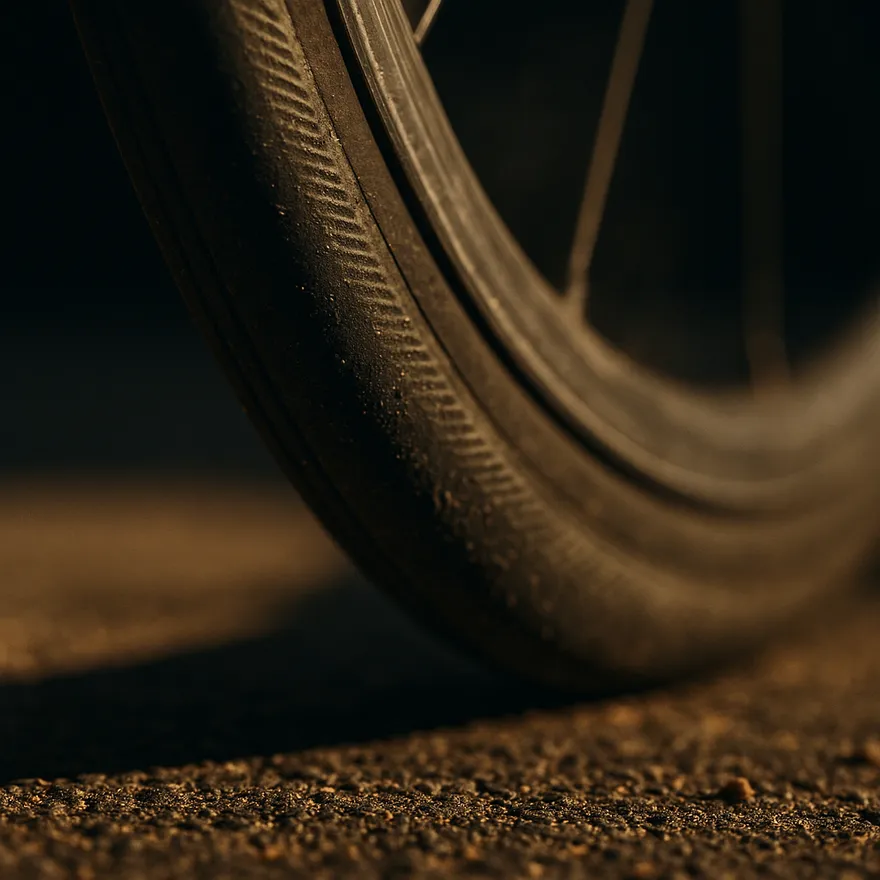
How we are measuring it
We are logging paired pressure readings on customers' bikes, measured cold at the start of a visit and again after the bike has stood on hot ground, with air temperature, surface temperature, tyre width and tube type recorded alongside. Road, gravel and MTB widths are tracked separately because the effect scales with pressure.
Every pressure recommendation you will read (on the tyre sidewall, in a manufacturer chart, in a bike-fit calculator) assumes you set and ride at roughly the same temperature. In Dubai that assumption breaks.
You inflate in a cool garage or an air-conditioned apartment. You then ride on asphalt that is far hotter than the air, on a dark tyre absorbing direct sun. The gas inside expands, and the pressure you are actually riding is not the number you set.
Why it happens
Pressure and temperature are directly related in a fixed volume: warm the air and the pressure rises. Two things make the effect larger here than the raw air temperature suggests.
Surface temperature far exceeds air temperature. Asphalt in direct sun runs well above ambient, and a black tyre sitting on it absorbs from both sides.
Braking adds heat directly into the system. Rim brakes put it straight into the rim and therefore the air. Long descents such as Hatta are where this matters.
The effect also scales with starting pressure, which is why a narrow road tyre at high pressure sees a much bigger absolute rise than a wide MTB tyre at low pressure. The riders most affected are the ones running the highest pressures.
What we are measuring
Paired readings, cold at the start of a visit and again after the bike has stood on hot ground, with air temperature, surface temperature, tyre width and tube type logged alongside. Road, gravel and MTB widths tracked separately.
We want to answer one question properly: how much should you actually take off a cold pressure setting before a summer ride in Dubai, if anything? Nobody has published a real figure for this market, and the guesses circulating in local riding groups vary wildly.
What we can say already
Do not over-correct. The most common mistake we see is riders dropping pressure substantially "because of the heat" and then riding badly under-inflated, which causes pinch punctures, poor handling, and rim damage on kerbs and potholes. Under-inflation does far more measurable damage in this city than heat expansion does.
Check pressure cold, before the ride, and set it to your normal figure. If you are riding a long descent with rim brakes, that is the case worth thinking harder about.
Common questions
Should I let air out of my tyres in Dubai summer?
No, not usually. Modern rims and tyres have a healthy safety margin, and the pressure rise from heat alone is smaller than most riders assume. The bigger risk is over-correcting and riding under-inflated, which causes pinch punctures and rim damage on kerbs.
Why does my tyre feel harder after riding in the sun?
Air expands as it warms, and dark tyres on hot asphalt heat considerably above air temperature. Braking adds more heat, particularly with rim brakes on a long descent. The pressure you set cold is not the pressure you are riding on.
Does heat cause blowouts?
No, rarely from heat alone on a modern setup. Blowouts usually trace to a tyre already close to its limit, a damaged sidewall, or heavy sustained rim braking. Heat is the last straw rather than the cause.
Want us to look at yours?
We come to you anywhere in Dubai, quote from a photo before travelling, and fix most bikes in one visit.
Get a price on WhatsApp