Symptom
Why your tyre is flat by morning
There is a useful distinction hiding in this question: flat by morning and soft after a week are different problems, and only one of them is a fault.
A tyre that is rock hard when you park it and completely flat twelve hours later has a leak. A tyre that needs topping up every week or so is behaving exactly as designed. Air migrates through butyl rubber, and it does so faster in a narrow tyre at high pressure.
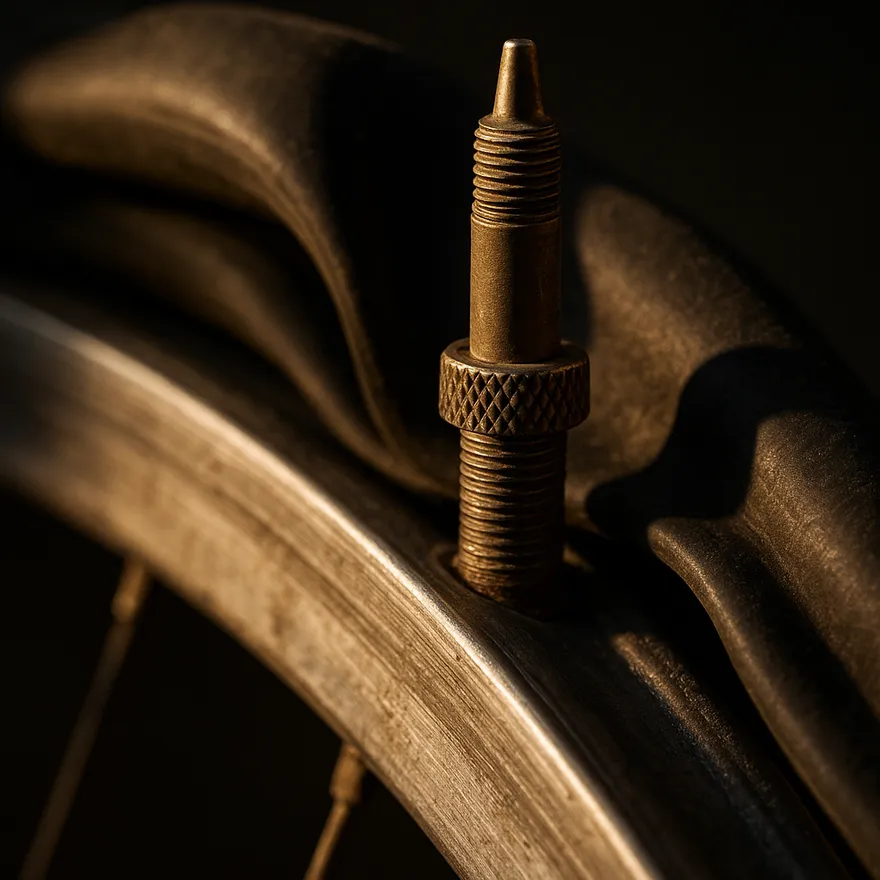
Before assuming a puncture, check the valve. A loose Presta core is one of the most common causes of a mystery overnight flat, it costs nothing to fix, and it is easy to miss because everything looks fine.
The Dubai-specific case is tubeless. Sealant relies on staying liquid, and sustained heat dries it out considerably faster than the manufacturer's stated interval, which is written for a temperate climate. A tubeless tyre that has started going soft overnight after months of holding fine has usually just run dry.
What usually causes it
Listed most likely first. Work down the list: the top one is right more often than not.
Slow puncture from a thorn or wire
How to tell: Loses air over hours rather than minutes. Often nothing visible: the object is still embedded and seals the hole while stationary.
The fix: Tube removed, hole found by inflating and listening or using water, and the tyre carcass swept by hand for whatever caused it.
Puncture repair (patch)AED 30
Faulty or loose valve core
How to tell: Put a drop of water on the open valve and it bubbles. Common on Presta valves where the core has worked loose.
The fix: Valve core tightened or replaced. Costs almost nothing and is the first thing worth checking.
Puncture repair (patch)AED 30
Tubeless sealant dried out
How to tell: Tubeless setup that held pressure fine a few months ago. Shake the wheel: no liquid sloshing inside.
The fix: Old sealant cleaned out and fresh added. In Dubai heat this is needed far more often than the label suggests.
Rim tape failed
How to tell: Repeated punctures in the same place on the tube, on the side facing the rim rather than the road.
The fix: Rim tape replaced. A tube patched without fixing the tape will fail again in days.
Inner tube replacementAED 50
Normal permeation: nothing is wrong
How to tell: Loses maybe 1–2 bar over a week, not overnight. Narrow high-pressure road tubes lose air fastest, latex tubes fastest of all.
The fix: None needed. Inflate before each ride, as you would anyway.
Worth knowing: Riding on a soft tyre is the fastest way to destroy a rim on a kerb or pothole, and pinch punctures nearly always trace back to under-inflation rather than bad luck.
Not sure which one it is?
Send a photo or a short description and we will tell you the likely cause and the price before anyone travels.
Get a price on WhatsAppCommon questions
Is it normal for bike tyres to lose air?
Yes. Butyl tubes lose air slowly through the rubber itself, and the narrower and higher-pressure the tyre, the faster it goes. Losing a bar or so over a week is normal. Going flat overnight is not.
Why does my tyre go down faster in summer?
Heat raises the pressure inside the tyre, which increases the rate air escapes through both the tube and any small leak. A tyre parked on a hot balcony sees far bigger swings than one kept indoors, which is one reason we are measuring pressure drift on Dubai asphalt properly.
How often does tubeless sealant need topping up here?
More often than the bottle says. Sealant dries out faster in sustained heat, and most tubeless riders in the UAE find it lasts noticeably less time than the label claims. We are gathering real figures on this rather than guessing.