Symptom
Finding a creak that comes with every pedal stroke
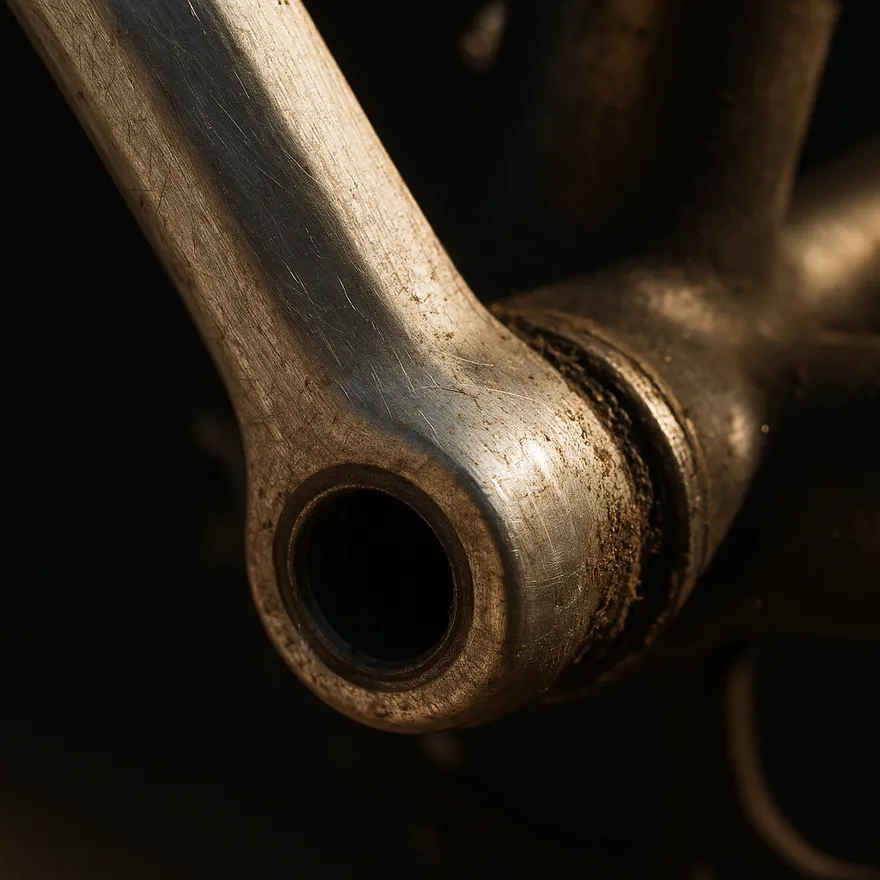
Creaks are the hardest fault to diagnose remotely and the easiest to get wrong expensively. The frame conducts sound, so a noise that seems to come from the bottom bracket very often originates somewhere cheaper.
The single most useful test costs nothing: stand up. If the creak disappears when you lift off the saddle, it is the seatpost or saddle, not the bottom bracket. If it continues, move down the list.
The second most useful test is to pedal backwards. A creak that persists when backpedalling under no load is unlikely to be drivetrain, since there is no meaningful force going through it.
Work from cheapest to most expensive. Pedals first. They take two minutes and are dry on a majority of the bikes we see. Then seatpost. Then chainring bolts. The bottom bracket comes fourth, not first, however much it sounds like it should be first.
What usually causes it
Listed most likely first. Work down the list: the top one is right more often than not.
Dry or loose pedal threads
How to tell: Creak matches pedal rotation exactly and often changes if you move your foot position. The cheapest thing to rule out, so rule it out first.
The fix: Pedals removed, threads cleaned and greased, refitted to torque.
Dry seatpost or loose saddle rails
How to tell: Creak appears when seated and vanishes when you stand. Riders almost always blame the bottom bracket for this one.
The fix: Seatpost removed, cleaned, and refitted with the correct grease or carbon paste. Saddle clamp set to torque.
Chainring bolts loose
How to tell: A sharp creak under hard pedalling, sometimes only in the big ring.
The fix: Chainring bolts removed, cleaned, greased and torqued.
Bottom bracket bearings worn or dry
How to tell: Creak is present seated and standing, and you can feel roughness turning the cranks with the chain off.
The fix: Bottom bracket removed, inspected, and either re-greased or replaced.
Crankset replacementAED 190
Loose cassette or a dry freehub
How to tell: Noise is at the rear rather than under your feet, and changes when you coast.
The fix: Cassette lockring re-torqued, freehub serviced if it is dry.
Worth knowing: Most creaks are annoying rather than dangerous, with one exception: a creak from a carbon frame or seatpost that appeared after a crash should be looked at before the next ride, since carbon can crack without any visible damage.
Not sure which one it is?
Send a photo or a short description and we will tell you the likely cause and the price before anyone travels.
Get a price on WhatsAppCommon questions
Is a creaking bike dangerous?
No, usually not. Most creaks are dry threads or a loose bolt. The exception is a creak from a carbon frame, fork or seatpost after an impact, which can indicate a crack that is not visible from outside and should be inspected before riding.
Why does everyone blame the bottom bracket?
Because sound travels through the frame, so a creak from the seatpost or pedals appears to come from the middle of the bike. The bottom bracket is where riders think they hear it, which is why it gets replaced unnecessarily so often.
How do you actually find a creak?
By elimination, in order of likelihood and cost: pedals, seatpost, chainring bolts, then the bottom bracket. It is methodical rather than clever, and it is why we charge for the fix rather than the diagnosis.